



David Taylor CDJR of Mayfield - Which engine is best for a 2026 Ram 5500 Chassis Cab for work around Paducah, KY?
Choosing the right engine is one of the most important decisions you will make when ordering a heavy-duty chassis cab, because it determines how efficiently you can tow, haul, and upfit for the work you do every day. For the 2026 Ram 5500 Chassis Cab, the available 6.7L Cummins® Turbo Diesel I6 and the available 6.4L HEMI® V8 each bring unique strengths. The right pick depends on your loads, routes, and duty cycle in and around Paducah, KY.
Below, we’ll break down the practical differences in capability, drivability, and ownership experience, with clear pointers so you can match the engine to your business. We will also touch on cabin tech, safety, and upfit planning, because a well-informed decision is about more than horsepower and torque numbers.
Power and Capability at a Glance
The available 6.7L Cummins® Turbo Diesel I6 delivers up to 800 lb-ft of maximum torque and 360 maximum horsepower, along with a maximum trailering capacity of 34,540 pounds. That combination is ideal for consistent heavy towing, larger upfits, and long runs with equipment in tow. The available 6.4L HEMI® V8 produces up to 429 lb-ft of maximum torque and 375 maximum horsepower, plus a maximum trailering capacity of 21,240 pounds, making it a strong choice for mixed-use duty cycles where you want responsive power with the fueling convenience of gas.
If your routes frequently involve steep grades, long highway stretches with a heavy trailer, or PTO-driven equipment, the diesel’s torque reserve can ease the strain on your powertrain. If your operations prioritize lighter trailers, shorter point-to-point travel, or widely available gas fueling, the HEMI® V8 may fit better.
How Your Route Shapes Your Choice
Think about the day-to-day realities of your business. The diesel shines when you are pulling close to capacity for longer periods, where strong low-end torque adds confidence at launch and on grades. The gas engine counters with a responsive, predictable feel that many drivers enjoy in urban or suburban routes with frequent stops. If your crews run shorter distances with varied loads, the HEMI® V8’s balance of horsepower and service convenience is compelling.
In the broader region, you may move between city streets, job sites, and highways with steady traffic flows. Diesel torque is a reliable ally for heavier trailers, while the gas engine’s smooth delivery and fueling ease can be the right move for mixed fleets and multi-stop schedules.
Upfits, Bodies, and Practical Considerations
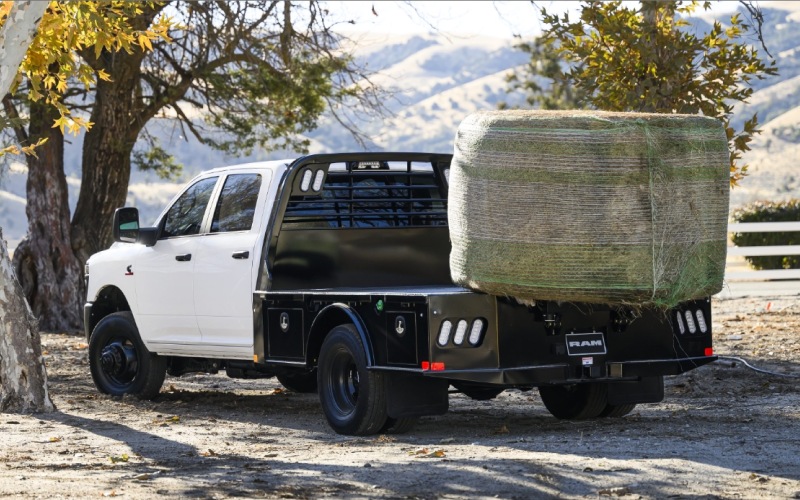
The 2026 Ram 5500 Chassis Cab is engineered to be easily upfitted with the body and equipment your trade requires. Whether you are mounting a flatbed, service body, dump, or a specialized vocational body, both powertrains are supported by a frame designed to simplify upfitting and stand up to heavy use. Ram’s Body Builder’s Guide provides dimensional graphics and key data points to help you confirm compatibility and plan your build without guesswork.
When you evaluate an upfit, consider more than raw weight. Account for tools, cargo, and any additional equipment such as cranes or compressors. The diesel’s torque is helpful for heavier installs and frequent towing, while the gas engine serves well for lighter upfits and local operations. Either way, starting with the body design and total operating weight helps narrow the right engine choice.
Cabin Tech and Crew Productivity
Engines get the headlines, but in-cab technology determines how efficiently your team communicates, navigates, and stays organized. The available high-definition 12-inch Uconnect® touchscreen is a big productivity win. It supports essential workday functions like navigation and compatible device connectivity on a display your crew can read at a glance. Pair it with heavy-duty interior materials and ample storage solutions to keep paperwork, small parts, and devices secure between stops.
Spending time in the cab should feel purposeful. Sit in the driver’s seat and try your daily tasks—pairing a device, setting a route, checking maps, and using voice controls. An intuitive cabin shaves minutes from every stop, which adds up across the week.
Safety and Driver Confidence
Helpful available systems such as Adaptive Forward Lighting and Forward Collision Warning add layers of awareness for teams that work early, late, and everywhere in between. Adaptive Forward Lighting can help direct light as you steer, while Forward Collision Warning can provide alerts to help you react to potential front-end hazards. These technologies are not a substitute for attentive driving, but they can support your drivers on busy job sites and fast-moving roads where a split-second matters.
Pair your chosen engine with the safety and security features that fit your routes. Confident drivers are more productive, and well-equipped trucks are better protected.
Making the Call: A Simple Checklist
To crystallize your decision, run through a quick checklist and see where your needs land. It can help you align engine capability with real-world demands.
- Typical trailer weight and frequency of towing
- Route length, grades, and highway versus urban mix
- Upfit weight, equipment needs, and PTO usage
- Fueling access and service preferences
- Crew comfort, tech expectations, and safety priorities
If you check heavy towing, longer routes, and equipment-intensive upfits, the diesel is likely your match. If your boxes favor shorter trips, lighter loads, and fueling flexibility, the gas engine may be the smarter operational fit.
Next Steps and Local Support
Hands-on evaluation can seal your choice. Plan a test drive that includes grades, stop-and-go segments, and a stretch of highway to feel power delivery in context. If possible, simulate your payload with ballast or drive a comparable upfit. Use the Uconnect® system the way your team will, and review available safety features to ensure they match your routes.
When you are ready to spec your truck, our commercial team at David Taylor CDJR of Mayfield can help translate your workload into a clear build plan and coordinate with trusted upfit partners, serving Paducah, Murray, and Benton. We will walk through engine selection, body compatibility, and timelines so you can get to work with confidence.
Frequently Asked Questions:
Do I need the diesel for occasional heavy towing?
If you tow at or near maximum capacity regularly, the diesel’s torque advantage is helpful. For occasional heavy towing with mostly lighter loads, the gas engine may meet your needs while offering fueling convenience.
Which engine is better for shorter, stop-and-go routes?
The gas 6.4L HEMI® V8 often feels right at home on shorter routes with frequent stops, thanks to smooth power delivery and straightforward fueling. It also pairs well with many lighter upfits.
Will the upfit I want work with either engine?
Most common vocational bodies can be designed around either engine. The best path is to confirm dimensions and weights using Ram’s Body Builder’s Guide and finalize with your upfitter and our commercial team.
What cabin features help crews work more efficiently?
The available high-definition 12-inch Uconnect® touchscreen and smart available cabin technology simplify navigation and communication, while heavy-duty materials and ample storage help the interior stand up to daily use.